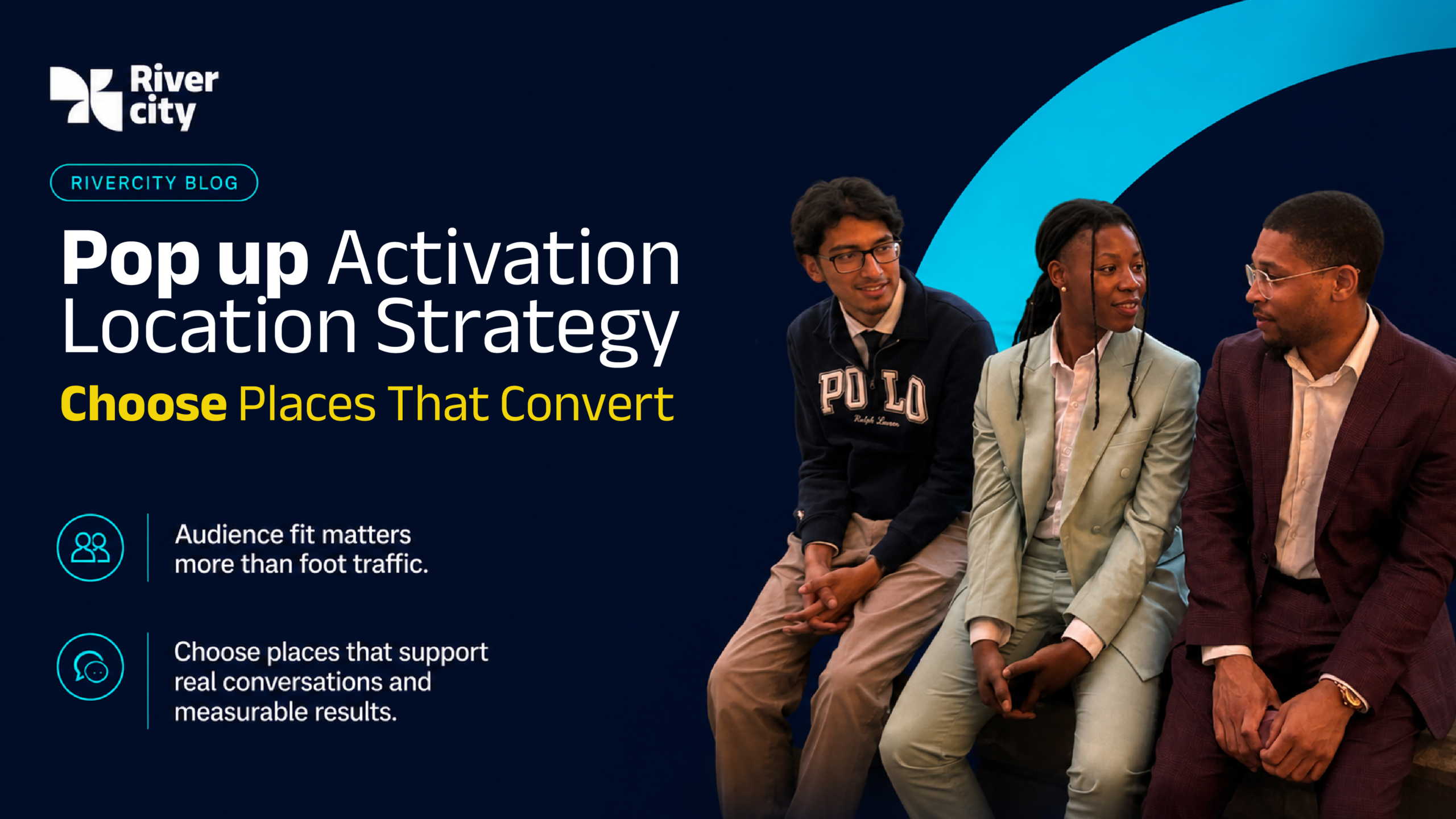
A pop-up activation can create attention fast. It can put a brand directly in front of people, start real conversations and turn passing interest into measurable action.
But location determines whether that opportunity becomes a result.
The best pop-up campaigns are not placed randomly in busy spaces. They are built around audience fit, timing, visibility, customer mindset and conversion potential. A crowded location may look attractive, but if the wrong people are walking past, the campaign can waste time, energy and budget.
For brands that want pop-up activations to produce more than awareness, location strategy matters.
Why Location Matters in Pop-Up Activations
Pop-up marketing works because it meets people where they already are. A brand does not have to wait for a customer to click, search or scroll. Instead, the brand shows up in a real-world environment where attention can turn into a conversation.
However, not every location creates the same quality of interaction.
A strong location can help a campaign:
- Reach the right audience.
- Increase meaningful engagement.
- Improve lead quality.
- Create stronger brand recall.
- Support product demonstrations.
- Make the campaign easier to measure.
- Generate better conversion opportunities.
RiverCity designs and executes live events, pop-up activations, high-impact marketing campaigns and sales promoter programs. Its service model includes location scouting, setup, staffing and live reporting, which makes location strategy a central part of campaign performance. You can learn more on the Services page.
Foot Traffic Is Not Enough
High foot traffic is useful, but it is not the same as high intent.
A location may have thousands of people passing through each day, but that does not automatically mean those people are the right audience for the brand. A better question is:
“Are the right people here, and are they in the right mindset to engage?”
For example, a busy commuter area may create visibility but limited conversation time. A community event may have fewer people but stronger engagement. A shopping district may work well for product discovery, while a business event may be better for B2B conversations.
The goal is not only to be seen. The goal is to be seen by people who are likely to care.
Start With the Target Audience
Before choosing a location, define who the campaign is trying to reach.
This may include:
- Age range
- Lifestyle
- Buying behaviour
- Local interests
- Profession
- Household type
- Service needs
- Event attendance habits
- Product category interest
A pop-up activation should be placed where that audience naturally spends time.
If the target audience is families, a community event may make sense. If the target audience is young professionals, a downtown activation may perform better. If the campaign is tied to a product launch, a shopping district or special event could create stronger discovery.
The clearer the audience, the easier it is to choose the right environment.
Match the Location to the Campaign Goal
Different campaign goals require different locations.
A campaign built for brand awareness may need a highly visible space with strong foot traffic. A lead generation campaign needs a location where people have enough time and interest to share information. A sales campaign needs an environment where the offer can be explained clearly and the next step feels easy.
Common campaign goals include:
- Creating brand awareness.
- Generating qualified leads.
- Promoting a product launch.
- Booking appointments.
- Driving sign-ups.
- Supporting a local event.
- Testing a new market.
- Building community presence.
The location should support the desired action.
If the goal is to collect qualified leads, the setup should allow for real conversations. If the goal is immediate sales, the location should support a clear offer and fast decision-making. If the goal is market testing, the location should provide reliable feedback from the target audience.
Consider Customer Mindset
Customer mindset is one of the most overlooked parts of pop-up activation planning.
People behave differently depending on where they are and what they are doing.
A person at a festival may be open to discovery and interaction. A person rushing through a transit area may have very limited attention. A person in a shopping environment may be more willing to compare offers. A person at a corporate event may expect a professional, value-focused conversation.
Before selecting a location, ask:
- Are people relaxed or rushed?
- Are they open to conversation?
- Are they likely to have time?
- Does the environment support the offer?
- Would the activation feel natural here?
- Is the brand adding value to the space?
The best pop-up activations feel relevant to the moment.
Visibility and Flow Matter
Even the right location can underperform if the setup is hard to see or difficult to approach.
A strong pop-up setup should consider:
- Where people enter and exit.
- How traffic flows through the area.
- Whether the brand is visible from a distance.
- Whether people can stop without blocking movement.
- Whether the setup feels inviting.
- Whether signage is clear.
- Whether the team has room to engage.
The activation should be easy to notice and easy to approach.
If people have to work too hard to understand what is happening, they may keep walking. Clear visuals, confident representatives and a simple message can make the location work harder.
Timing Can Change Everything
The same location can perform differently depending on the day and time.
A shopping area may be strongest on weekends. A business district may perform better during lunch hours or after work. A community event may have peak engagement during specific scheduled activities.
Timing should be planned around the audience’s behaviour.
Brands should consider:
- Day of the week
- Time of day
- Seasonal activity
- Local events
- Weather
- Traffic patterns
- Competing activities
- Audience availability
A good activation plan does not only ask where to show up. It asks when to show up.
Local Relevance Builds Stronger Engagement
Pop-up activations work best when they feel connected to the local environment.
This is especially important for businesses running campaigns in specific cities, neighbourhoods or regional markets. A generic activation may get attention, but a locally relevant campaign can create a stronger response.
Local relevance may include:
- Referencing a local event.
- Choosing a familiar community space.
- Adapting messaging to the market.
- Understanding local customer needs.
- Using local promoters or representatives.
- Building around regional habits or timing.
RiverCity is based around the idea of putting brands in front of real people, in real places, with campaigns that are designed to make a real impression. You can learn more about that approach on the About page.
Measure Location Performance
A pop-up campaign should not be judged only by how busy it looked.
Location performance should be measured with clear data.
Useful metrics include:
- Conversations started.
- Qualified leads captured.
- Product demonstrations.
- Sign-ups or sales.
- Conversion rate.
- Cost per result.
- Best-performing time periods.
- Customer feedback.
- Team observations.
- Follow-up opportunities.
This helps brands understand which locations are worth repeating and which should be adjusted.
RiverCity’s process includes real-time updates, performance data and post-campaign reporting, helping brands understand what moved and what it cost to move it. That measurement mindset is important for any pop-up activation that is expected to drive growth.
Test Before Scaling
A single pop-up location can teach a brand a lot.
Before expanding across multiple areas, brands should test the campaign in one or two carefully selected locations. This helps identify what messaging works, what objections appear, what customer segments respond and what setup creates the best engagement.
Once the data is clear, the campaign can be scaled with more confidence.
RiverCity’s process focuses on listening first, building the strategy, measuring results and scaling what works. That makes pop-up testing a practical first step before larger rollouts.
Final Thoughts
The success of a pop-up activation depends on more than creativity. It depends on placing the right message, team and offer in the right environment.
A strong location strategy helps brands turn attention into action. It improves audience fit, customer engagement, lead quality and campaign performance.
For businesses that want pop-up marketing to create measurable results, the question is not just, “Where can we get the most traffic?” The better question is, “Where can we create the strongest customer conversations?”
To explore how RiverCity supports pop-up activations, live events, marketing campaigns and sales promoter teams, visit the Services page or contact the team to plan your next campaign.
FAQs
What is a pop-up activation?
A pop-up activation is a temporary, in-person brand experience designed to engage customers in a specific location, such as a shopping area, community event, venue or high-traffic public space.
How do you choose the best location for a pop-up activation?
The best location should match the target audience, campaign goal, customer mindset, timing, visibility and conversion opportunity.
Is high foot traffic always best for pop-up marketing?
No. High foot traffic helps, but audience fit and engagement quality are more important than volume alone.
How can brands measure pop-up activation performance?
Brands can measure conversations, qualified leads, demonstrations, sign-ups, conversion rate, cost per result, customer feedback and location performance.